Frequently Asked Questions
The most-asked questions about respiratory & infectious diseases.
What exactly is the 'respiratory & infectious diseases' franchise about?
It is the broad category of illnesses that target the airways, lungs, or spread person-to-person via droplets, aerosols, or direct contact. The 'story' spans everything from a mild common cold to severe pneumonias and systemic infections like tuberculosis.
Who are the main 'characters' fans talk about most?
The most frequently discussed pathogens include Influenza A, SARS-CoV-2, Mycobacterium tuberculosis, and RSV, each with distinct transmission patterns and clinical profiles. The adaptive immune system—T-cells, neutralising antibodies, and innate barriers—plays the recurring hero role throughout every arc.
Where should a newcomer start 'reading the lore'?
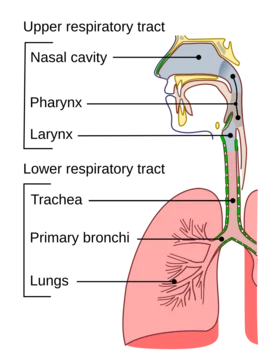
Begin with basic respiratory anatomy (trachea, bronchi, alveoli) and introductory immunology to understand the setting and the body's defence mechanics. From there, branch into virology or bacteriology depending on which pathogen storyline interests you most.
What are the most 'iconic' moments in the franchise's history?
The 1918 H1N1 influenza pandemic, the 2003 SARS outbreak, and the 2019–2020 SARS-CoV-2 pandemic are the three events most often referenced. Each reshaped public-health infrastructure, accelerated vaccine-development timelines, and expanded global genomic-surveillance networks.
How do the 'villains' (pathogens) actually spread?
Most respiratory pathogens travel via expelled droplets or fine aerosol particles generated during coughing, sneezing, or talking. Some, like Mycobacterium tuberculosis, require prolonged close-range exposure, while others such as norovirus also exploit the faecal-oral route.
What's the deal with 'variants' and 'sequels'?
Variants arise through point mutations or recombination events and can shift transmissibility, immune-escape potential, or disease severity. Public-health agencies track them via genomic surveillance, and vaccine platforms are periodically reformulated to match the strains in circulation.
Who are the key real-world 'authors' behind the canon?
Foundational figures include Louis Pasteur and Robert Koch for germ theory, and more recently Katalin Karikó for mRNA lipid-nanoparticle technology. Peer-reviewed journals such as The Lancet, NEJM, and Nature Medicine serve as the closest thing to an official script.
Which symptoms count as 'canon' warning signs?
Fever, persistent dry cough, progressive dyspnoea, and loss of taste or smell are the most commonly cited red flags across multiple respiratory infections. Severity ranges from self-limiting upper-airway irritation to acute respiratory distress syndrome requiring ICU-level support.
Are vaccines the 'final boss' or just a power-up?
Vaccines are a preventive tool that primes adaptive immunity without requiring active infection, but they do not replace hand hygiene, ventilation, or antimicrobial treatment once infection is established. Their protective efficacy varies by pathogen, strain match, and the individual's underlying immune status.
Where can fans find the most up-to-date 'patch notes'?
WHO situation reports, CDC disease-specific pages, and ECDC weekly epidemiological bulletins provide the most current data on circulation, severity, and clinical guidance. For deeper dives, preprint servers like medRxiv and peer-reviewed publications track emerging research in near real-time.